



Diversity through Distance: A Global Powerhouse
The sheer scale of California is the foundation of its agricultural success. Stretching over 1,200 kilometers from north to south and covering an area larger than Germany, the state brings together a remarkable range of climates within relatively short distances. Along the coast, cool air and fog slow down ripening, while just a few hours inland, steady heat and dry conditions create an entirely different environment. Mountain ranges such as the Sierra Nevada shape rainfall patterns and separate these zones, allowing crops with very different needs to thrive across the state at the same time.
This contrast is what makes California so productive. Grapes benefit from the long, gradual ripening along the coast, while nuts and dried fruits rely on the consistent warmth of the interior to develop their characteristic texture and flavor. More than 400 different commodities are grown across the state, and its production reaches far beyond the US. Today, California supplies nearly all of the country’s almonds, walnuts, and pistachios, while also playing a leading role in the production of grapes, strawberries, and a wide range of vegetables.
Before taking a closer look at its regions, this short video offers a broader glimpse into what defines California: A Tribute to Farmers in the U.S. West
Northern California: Shaped by the Pacific Ocean
Northern California’s culinary identity is inseparable from the power of the Pacific Ocean. Along the coast, the meeting of cold ocean currents and warm inland air creates the region’s famous coastal fog, which acts as a natural cooling system. This “natural air conditioning” is essential for the survival of coastal ecosystems, including redwood forests as it reduces water stress and provides a source of irrigation during the dry season. The marine layer also helps shield sensitive fruit from strong summer sun, preventing crops from ripening too quickly. This allows for a steady, slow development of flavor.
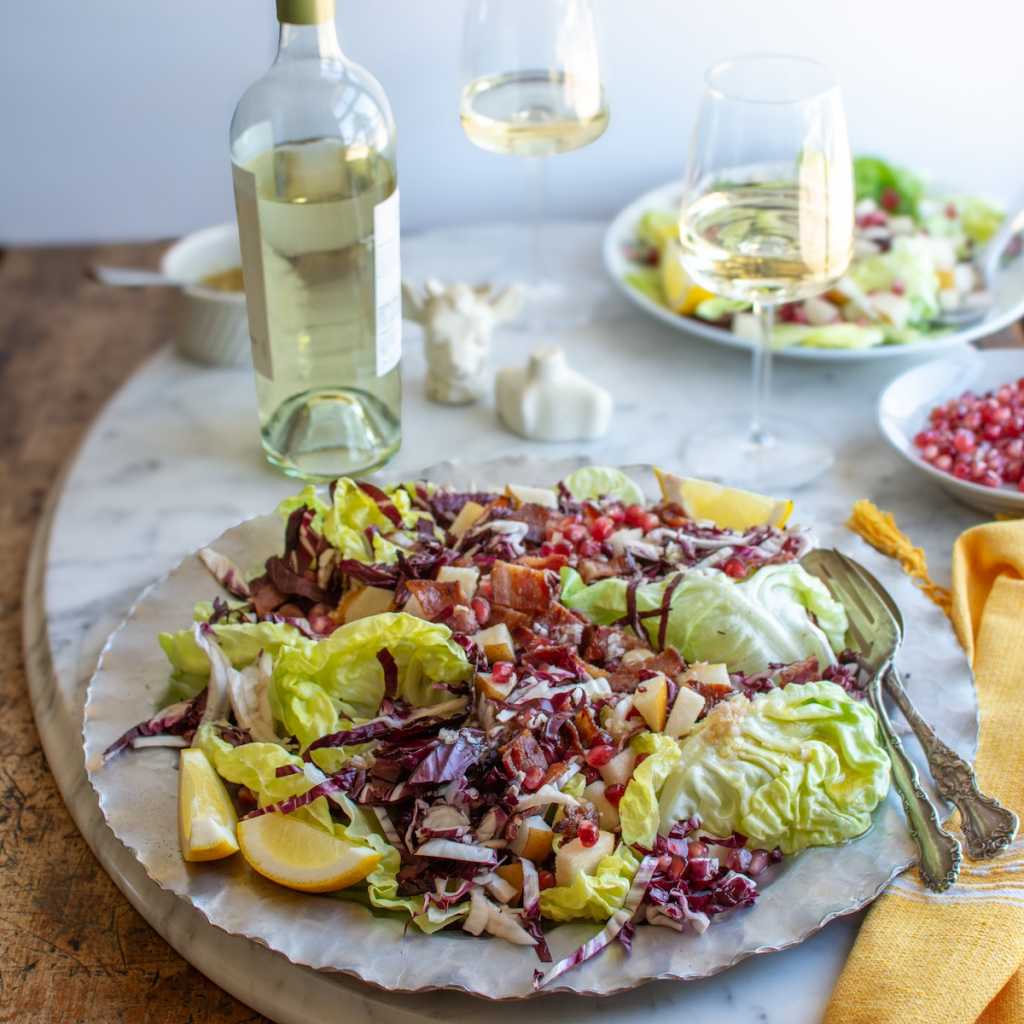
Radicchio Salad with Asian Pear
This extended growing season is the secret behind the prestige of California Wines. In regions like Napa and Sonoma, vineyards benefit from these cool nights and misty mornings, which preserve the grapes’ delicate aromas and balanced acidity. This translates into wines that are celebrated for their structure and elegance, particularly cool-climate varieties like Pinot Noir and Chardonnay. These characteristics make them ideal for lighter, fresh dishes.
A crisp Radicchio Salad with Asian Pear, for instance, mirrors the brightness of a California Pinot Gris, showcasing a food culture that values clarity and seasonal freshness.
The Central Valley: The World’s Orchard
Travel inland, and the fog thins to reveal the Central Valley, a flat, fertile expanse protected by mountain ranges. This is the agricultural heart of the state and one of the most productive regions on Earth. Here, the Mediterranean climate – characterized by long hours of intense sunshine and dry summers – creates the perfect environment for crops that require consistent heat and a low-moisture harvest period.
The valley is world-renowned for its nut production, with California Almonds and American Pistachios leading the way. These orchards rely on the valley’s specific rhythm of “chill hours” in the winter followed by blistering summer heat to develop their signature crunch and nutrient density. The same sun also serves as a natural processing tool for California Raisins, as grapes dry in the heat of the San Joaquin Valley, concentrating their sugars and minerals into a shelf-stable powerhouse of energy. This region proves that scale and quality can go hand-in-hand, providing the backbone for everyday pantry staples used across the globe.
Southern California: Warmth, History, and Depth
As the journey continues toward Southern California, the air becomes drier and the landscape more arid. The region sits between the Pacific coast and the Mojave Desert – a geography that creates its own microclimate: frost-free winters, long dry summers, and more sunshine per year than almost anywhere else in the country. The Santa Ana Mountains and the Coast Ranges act as a natural shield, trapping warmth and keeping the growing season going well into months when most of the northern hemisphere has long stopped harvesting.
Southern California is steeped in history, with agricultural roots reaching back to the 18th-century Spanish missions, which first introduced Mediterranean crops like grapes and olives to the area. Today, with sophisticated irrigation and land management, SoCal continues to produce hearty crops that thrive in sustained warmth.
The intense sun here results in a remarkable concentration of flavor, particularly in California Walnuts and American Pecans. These nuts move beyond being mere garnishes; their rich oils and robust textures allow them to anchor main courses. Similarly, staples like Sweet Potatoes and California Prunes benefit from the long growing season to develop a deep, honey-like sweetness. Cooking in the South often mirrors this intensity, favoring slow-simmered stews or baked dishes that allow these concentrated flavors to meld and mature over time. A dish like Top Chef Stephanie Cmar’s Beef Stew with Red Wine reflects this approach particularly well.
California on the Plate: A Legacy of Adaptability
What truly sets California apart isn’t just a single “regional dish,” but a flexible philosophy of cooking centered on quality and availability. The state’s food culture was shaped by the Gold Rush of the mid-19th century, which brought a global influx of people, ingredients, and culinary traditions to the region almost overnight.
Fun fact: During this period, California’s population grew rapidly as people arrived from Europe, Latin America, and Asia, each bringing their own food traditions. This exchange laid the groundwork for a cuisine that is still defined by openness and adaptation today.
Whether it is the use of USA Rice in a vibrant citrus salad or the inclusion of California Cling Peaches in a savory grilled accompaniment, the emphasis remains on the integrity of the ingredient. For the home cook, California’s bounty offers endless adaptability. Elements like California Cherries can be used to add a tart pop to a grain bowl, while California Table Grapes offer a burst of sweetness to a savory cheese board—proving that the best meals aren’t necessarily the most complex, but the ones that make the best use of the land’s natural rhythm.
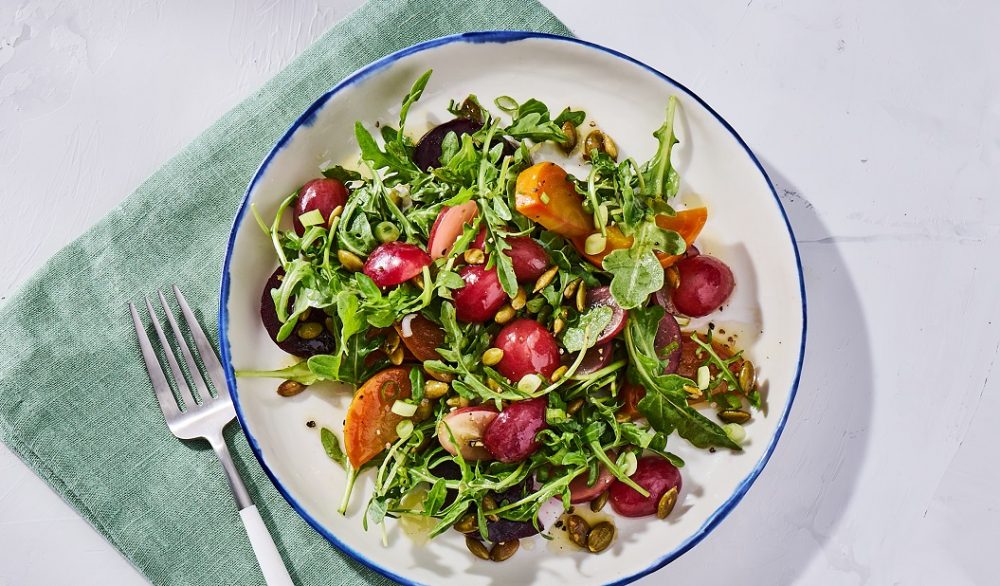
Lemony California Grape and Beet Salad
This Lemony California Grape and Beet Salad brings together contrasting textures and bright, layered flavors. Sweet and juicy California grapes balance the earthiness of thinly sliced beets, while arugula adds a peppery note and pumpkin seeds provide crunch. A simple lemon vinaigrette ties everything together, highlighting freshness and acidity. Light yet structured, the dish reflects a style of cooking that relies on a few well-matched ingredients rather than complexity.
California Cling Peach & Spicy Grilled Chicken
This California Cling Peach & Spicy Grilled Chicken combines sweet and savory elements in a way that feels both bold and balanced. Juicy cling peaches caramelize slightly on the grill, enhancing their natural sweetness, while a barbecue and bourbon glaze with serrano peppers adds heat and depth to the chicken. Finished with a squeeze of fresh lime, the dish brings together richness, spice, and fruit in a composition that highlights the versatility of California-grown ingredients.