

In 1789, just a few years after the declaration of independence came into effect, Thomas Jefferson returned home from Paris with a suitcase full of ideas. Among them: a recipe for vanilla ice cream, handwritten in his own careful script, which still survives in the Library of Congress today. For Jefferson, ice cream was not just a dessert. It was a statement, proof that the new American republic could appreciate the finer things, could cultivate taste alongside liberty. He reportedly served it at the White House in pastry shells warm from the oven, a contrast of temperatures that stunned his guests.
It is a small story. But it says something true about how American food developed: not in a straight line, not according to plan, but through curiosity, accident, ambition, and the slow transformation of what the land could offer.
The frontier kitchen: working with what was there
In the early years of the republic, most Americans ate simply because they had to. The frontier kitchen was defined by what grew well, what stored through winter, and what could be produced without the trading networks of the Old World. Corn was the great staple, ground into cornmeal for porridge, baked into cornbread, fermented into whiskey. It fed families from Georgia to the Ohio Valley and became so central to early American life that the crop itself was almost a cultural symbol.
Alongside corn, the humble bean and the sweet potato formed the backbone of everyday meals. Sweet potatoes grew abundantly in the warm South, required little maintenance, and stored for months. They were roasted in coals, mashed into pies, and eaten as a reliable comfort through hard seasons. Cranberries, harvested wild from the bogs of New England, were boiled into preserves that lasted through the cold months and added a sharp brightness to otherwise heavy meals.
These were not glamorous ingredients. But they were honest ones, and they shaped a distinctly American way of cooking: practical, resourceful, deeply tied to the rhythms of the seasons.
The nineteenth century: expansion and experimentation
As the country expanded westward during the 1800s, so did its pantry. New growing regions opened up. The Mississippi Valley became a breadbasket. Orchards spread across the mid-Atlantic states. And with the construction of railroads, fresh produce could travel for the first time in American history, arriving in cities before it had time to spoil.
This was also the era of great agricultural experimentation. Farmers began to understand that different soils and climates produced dramatically different results. In Idaho, the volcanic-influenced soils turned out to be almost uniquely suited to Potatoes producing a dry, starchy tuber that cooked differently and tasted better than potatoes grown almost anywhere else. In the Pacific Northwest, cool wet winters and long summers created ideal conditions for apples. By the end of the century, Washington State orchards were supplying the entire country.
At the same time, new preservation technologies changed what was possible in the kitchen. The canning industry, which expanded rapidly after the Civil War, meant that tomatoes, corn, and Cling Peaches could sit on a shelf in December. Refrigeration, still a luxury for most households in the 1880s, gradually became standard. The American kitchen was slowly gaining access to ingredients that previous generations could only eat in season.
A breakfast revolution: from porridge to the cereal box
Few chapters in American food history are stranger, or more consequential, than the invention of breakfast cereal.
In the 1890s, a sanitarium physician in Battle Creek, Michigan named John Harvey Kellogg was convinced that a simple, grain-based diet was the key to good health. While developing food for his patients, he accidentally left a batch of boiled wheat out overnight. Running it through rollers the next morning, he discovered it flaked. He baked it. His patients loved it.
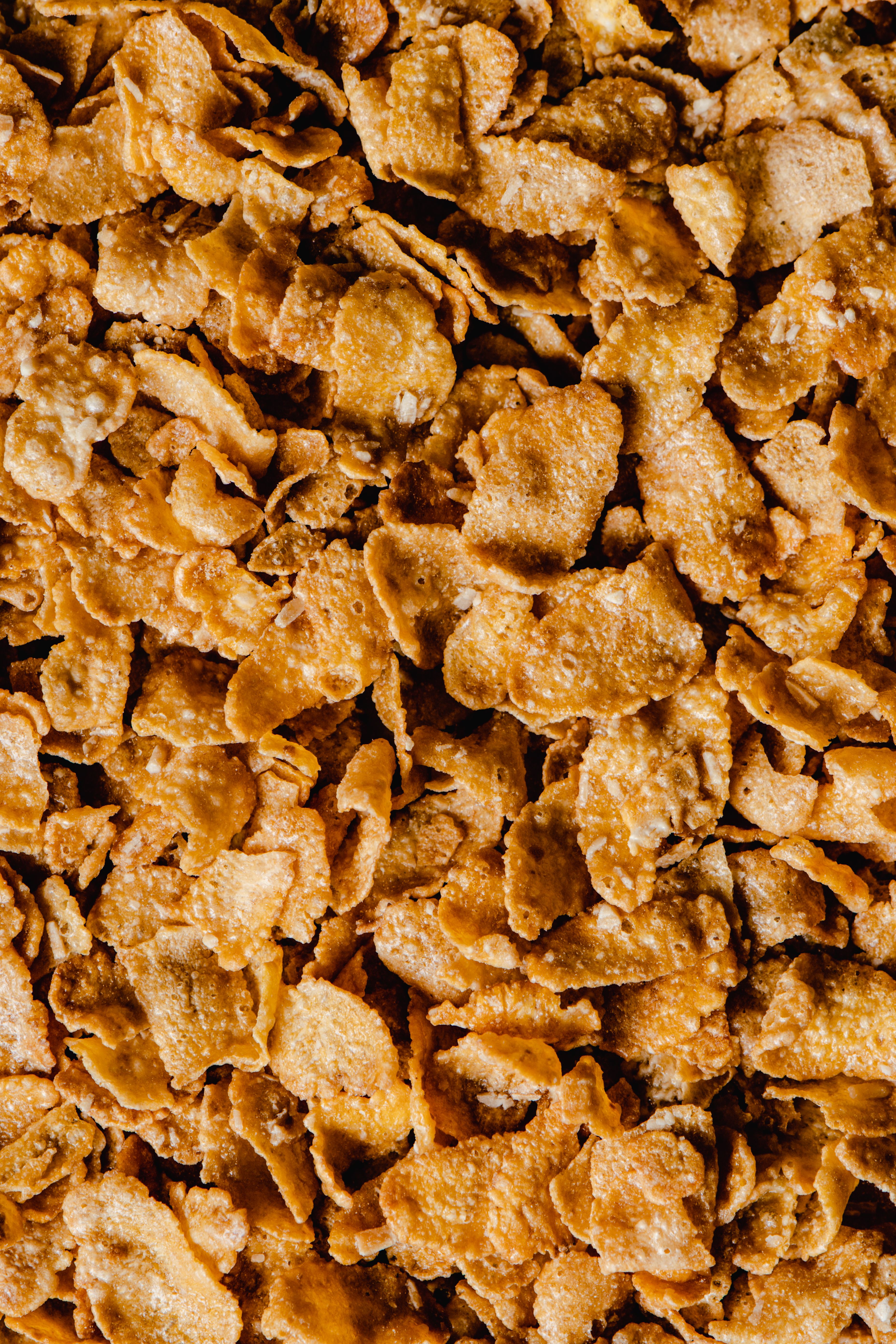
His brother Will saw a business. Within a few years, Kellogg’s Corn Flakes were being sold by mail order across the country, and dozens of imitators had appeared in Battle Creek. The American breakfast was transformed almost overnight from a meal of cooked porridge, eggs, and leftovers into something faster, lighter, and available straight from the box.
It sounds trivial. But the rise of processed breakfast food was actually one of the first signs of a much larger shift: the modernization of American eating, the idea that food could be quickly produced, standardized, and available everywhere. It was a development that would define the twentieth century.
California and the reinvention of the American pantry
By the early twentieth century, California had become the great agricultural laboratory of the country. Its Mediterranean climate with dry summers, mild winters and fertile valleys turned out to be suited to crops that struggled to grow on the East Coast or in the Midwest. Almonds, Pistachios, and Walnuts thrived in the Central Valley. Grapes grew in abundance across the inland hills. Artichokes, olives, and Figs found a home along the coast.

What California produced was not just abundance, but variety. For the first time, American home cooks had regular access to ingredients that had previously been expensive imports. Raisins from sun-dried California grapes became a kitchen staple. Walnut orchards that started as modest experiments grew into a global industry. And those same sun-soaked valleys that perfected the raisin also gave rise to a world-class wine culture. California Wines gradually earned a place on tables far beyond the state’s borders. The tomato, meanwhile, found ideal growing conditions in the San Joaquin Valley, eventually supplying much of the country’s canned tomato sauce, ketchup, and paste.
This was also the era when American agriculture began to think seriously about scale. New irrigation systems, cold storage facilities, and refrigerated rail cars meant that California could feed not just itself, but the nation. The phrase “fresh from California” became shorthand for quality.
The mid-century table: how America changed the way the world eats
The decades after World War II brought a new prosperity and with it, a renewed kind of confidence in the American kitchen. The United States did not just feed itself during this era. It exported a way of eating that spread to every corner of the world.
The concept of convenience food, the idea that good ingredients could be preserved, packaged, and made available to anyone, anywhere, at any time was a genuinely American innovation. Ketchup, peanut butter, canned fruit, and bottled dressings built on decades of agricultural abundance and industrial ingenuity. They put American flavors on tables in Tokyo, London, and São Paulo. The backyard barbecue, with its slow-smoked meats and its particular combination of sweetness, smoke, and char, became an export in its own right, a cooking philosophy that other cultures absorbed and made their own.
What America understood, perhaps better than anyone, was that food could travel. That the right combination of quality ingredients and smart preservation could turn a local harvest into a global pantry staple. It was a lesson rooted in the same agricultural ambition that had been building since the first frontier kitchens — and it set the stage for everything that followed.
Back to the land: the turn toward quality and sustainability
By the 1970s, a new development had begun. Writers like Alice Waters in California began arguing that good food started with good ingredients – that a tomato grown in honest soil and eaten in season was worth more than a perfect-looking supermarket tomato shipped from a thousand miles away. Waters opened her restaurant Chez Panisse in Berkeley in 1971, and its philosophy of using local, seasonal, simple ingredients slowly changed the conversation about what American cooking could be.
Over the following decades, farmers’ markets spread across the country. Organic farming moved from the fringes to the mainstream. Heirloom vegetables, ancient grains, and heritage breeds found new audiences among cooks who wanted to eat with intention. Texas Grain Sorghum, a resilient crop with roots stretching back generations, found renewed relevance not just as food, but as a versatile raw material suited to a changing climate. Wild Alaska Seafood, harvested from cold and nutrient-rich waters under strict environmental standards, became a model for what sustainable fishing could look like.
The American pantry was adding a new facet. It was learning, again, to pay attention to where things came from.
Two hundred and fifty years on
Today, the American table holds all of these histories at once. A home cook might start breakfast with oats grown in the Pacific Northwest, sweeten them with wild blueberries from Maine, and reach for Almonds from California as an afternoon snack. Dinner might involve American Sweet Potatoes roasted with Orgeon Hazelnuts, followed by a Cranberry tart made with fruit from the same bogs that fed the early colonists.
The ingredients are ancient and modern at the same time. The farming methods have modernized to feed the world. The kitchens are different. But the underlying story of people working with their land, adapting to what it offers, and finding ways to turn the practical into the delicious is the same one that Thomas Jefferson was part of when he came home from Paris with his vanilla ice cream recipe.
Two hundred and fifty years is a long time. Long enough to transform a handful of native crops and early experiments into one of the most diverse and influential food cultures in the world. The American table is still being set. And the best part is that the story is not finished yet.